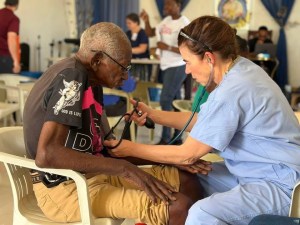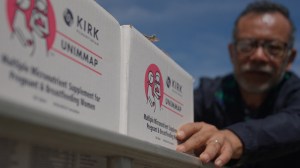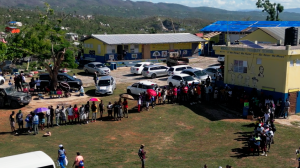

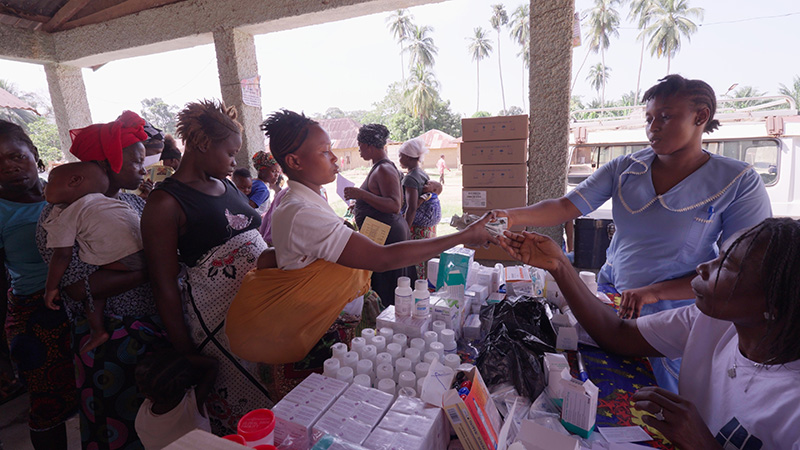
Mobile Distribution Clinic, Bo, Sierra Leone, 2025
Key Takeaways
- Faith-based organizations are a significant pillar of the healthcare infrastructure in developing nations, often delivering between 30% and 40% of all healthcare services in sub-Saharan Africa.
- Severe supply chain bottlenecks and inadequate equipment donations leave many rural clinics struggling, with nearly 40% of medical device donations sitting out of service.
- Compassionate donors bridge the gap between under-resourced clinics and lifesaving treatments by funding the consistent, reliable supply of medical supplies.
- Active partnerships with trusted faith-inspired networks ensure that aid reaches the most vulnerable, remote, and marginalized communities.
Imagine walking into a small clinic in a remote village. A young mother sits quietly on a wooden bench, holding her 4-year-old son. Her eyes reflect a familiar mix of desperation and hope. She walked three hours through rugged terrain because she trusted the local mission hospital to heal her child. But inside the clinic, the doctor faces a devastating reality. The pharmacy shelves stand bare; the clinic exhausted its supply of essential antibiotics last week, and the sole oxygen monitor no longer functions.
Mothers and doctors face this challenging reality daily across the developing world. In resource-limited regions, the difference between life and death often hinges entirely on the availability of basic medical supplies, reliable pharmaceuticals, and functioning equipment.
Faith-based healthcare networks, such as MAP International, often step in to help fill these critical gaps, offering hope and support in places where healthcare systems are struggling to meet people’s needs. Compassionate supporters fuel these clinics, transforming despair into healing through consistent, targeted donations.
The Undeniable Footprint of Faith-Inspired Care
Many people don’t realize how heavily global health relies on Christ-centered organizations. In many rural and marginalized communities, global health organizations represent the primary, closest, and safest source of medical treatment. Additionally, the World Health Organization notes that these institutions provide essential maternal services, disease treatment, and health education in low-income nations, as detailed in a National Institutes of Health report.
Mission hospitals and clinics operate on the front lines of poverty. They don’t turn patients away because they cannot pay, nor do they leave when vulnerable communities face crisis and uncertainty. Instead, faith-based medical teams embed themselves deeply within the communities, gaining the trust of local families, understanding cultural nuances, and delivering holistic care that addresses physical, emotional, and spiritual needs.
The Hidden Crisis of Empty Shelves
Despite their deep commitment, healthcare workers in low-resource settings face systemic barriers that passion alone cannot overcome. Fractured supply chains, skyrocketing transport costs, and geographic isolation frequently cut off remote clinics from essential medicine and resources. Treatable illnesses become dangerous, injuries worsen, and parents struggle to find care because healthcare resources remain painfully out of reach.
Well-meaning organizations often try to help by shipping surplus equipment, yet uncoordinated charity can inadvertently compound the problem. A landmark study by the National Academy of Medicine reveals that up to 40% of medical device donations in developing countries remain out of service. Clinics receive advanced machinery without the necessary replacement parts, user manuals, or local biomedical technicians to maintain them. Consequently, broken ventilators and uncalibrated monitors clutter storage rooms, serving as painful reminders of unmet potential.
To solve this crisis, modern ministries prioritize smart, demand-driven logistics. Rather than shipping random assortments of medical surplus, strategic relief efforts supply exactly what local clinics request, ensuring that every donated dollar translates directly into usable, lifesaving tools.
Turning Compassion Into Tangible Healing
Consider the real-world impact of MAP International’s supply chain. When a clinic receives a steady supply of basic medical consumables, the entire community transforms. Maternal mortality rates drop. Children stay in school. Families avoid catastrophic medical debt because faith-based clinics provide affordable, high-quality pharmaceuticals.
Your financial gifts do more than provide medicine, health supplies, and medical devices; they breathe life and energy back into exhausted medical staff. Your support validates their sacred calling and amplifies their hands-on ministry.
An Invitation to Partner in Hope
Global health equity requires a collective, compassionate response. Governments and secular NGOs perform vital work, but faith-based organizations possess the unique, trusted local presence necessary to reach the final mile of humanitarian aid. They turn your financial resources into local healing, ensuring that no patient suffers simply because of their geographic location.
You can reshape the future of global medicine today. By contributing to MAP, you help ensure that medicine reaches people who are still waiting for care. Together, we can support healthcare providers, strengthen communities, and bring healing, hope, and health to families around the world.